
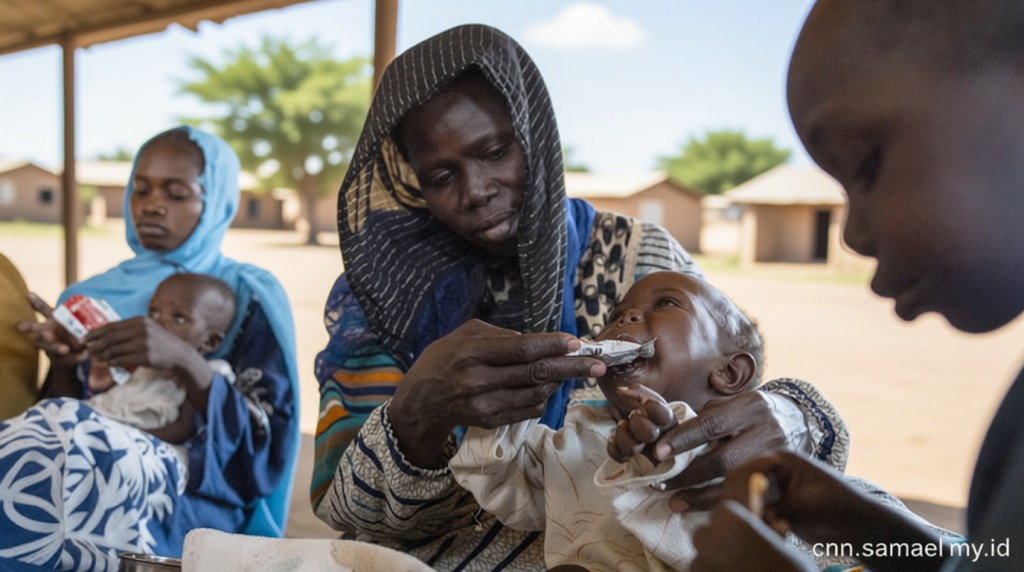
The United States on Monday Announced a $2 Billion Pledge for UN Humanitarian Aid
President Donald Trump’s administration continues to slash US foreign assistance, while the United States on Monday announced a $2 billion pledge for UN humanitarian aid. The move comes as the administration warns United Nations agencies to “adapt, shrink or die” in the face of new financial realities.
The $2 billion is a small fraction of the US’s historical contributions to UN humanitarian programs. However, officials argue it reflects a generous amount that will maintain the United States’ status as the world’s largest humanitarian donor.

Creating an Umbrella Fund for Redirected Aid
The pledge establishes an umbrella fund from which money will be distributed to individual agencies and priorities. This approach aligns with US demands for drastic changes across the United Nations, a strategy that has alarmed many humanitarian workers and led to severe reductions in programs and services.
According to UN data, traditional US humanitarian funding for UN-backed programs has reached as high as $17 billion annually in recent years. US officials note that only $8 to $10 billion of that has been in voluntary contributions, with the remainder covering annual dues related to UN membership.
“Adapt, shrink or die”
Critics Warn of Long-Term Consequences
Critics argue that Western aid cutbacks have been shortsighted, driving millions toward hunger, displacement, or disease and harming US soft power globally. The move caps a crisis year for many UN organizations, including refugee, migration, and food aid agencies.
The Trump administration has already cut billions in US foreign aid, resulting in reduced spending, aid projects, and thousands of job losses. Other traditional Western donors have also scaled back their outlays.
Preliminary Deal with UN’s OCHA
The announced US pledge for UN aid programs takes shape in a preliminary deal with the UN Office for the Coordination of Humanitarian Affairs (OCHA), led by Tom Fletcher, a former British diplomat and government official.
“more consolidated leadership authority”
Even as the US reduces its aid, global needs have surged. Famine has been recorded this year in parts of conflict-ridden Sudan and Gaza, while floods, droughts, and natural disasters attributed to climate change have claimed many lives and displaced thousands.
The cuts will significantly impact UN affiliates such as the International Organization for Migration, the World Food Program, and the refugee agency UNHCR. These agencies have already received billions less from the US this year compared to the previous Biden administration or even during Trump’s first term.
Now, Fletcher’s office aims to become a central funnel for US and other aid money, redirecting funds to agencies rather than dispersing contributions across individual appeals for aid. This shift is intended to improve efficiency, accountability, and effectiveness in the UN’s humanitarian efforts.