
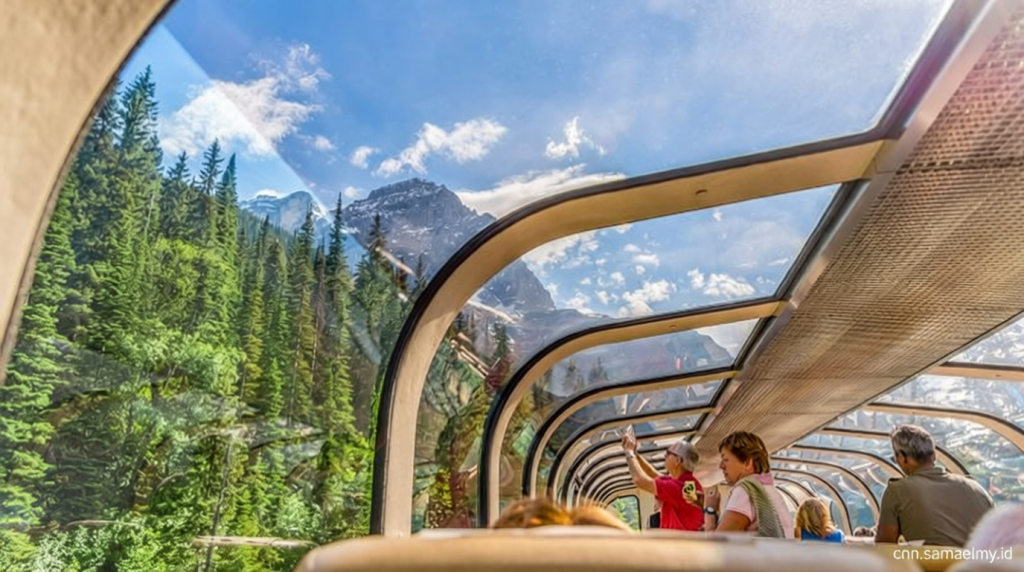
The Anticipation of a Journey
When you’re standing in a big-city railway station, scanning the departure board for your train, it doesn’t matter whether you’re a seasoned traveler or a nervous newcomer. Few travel moments match that brief tingle of anticipation, as the possibilities for adventure flicker through your mind.
Standing beneath the giant electronic screens at stations in Zurich, London, Vienna, Tokyo, or Shanghai, it’s hard not to daydream about scrapping your plans altogether and boarding a train to some far-off city. As new routes open and high-speed rail networks expand across much of the world, it’s becoming easier than ever to give in to that impulse and escape by train.

From budget overnight services to hyper-luxury “land cruises,” the range and quality of rail travel continue to expand. Together, they offer a snapshot of how rail travel is changing—and why 2026 may prove a particularly exciting year for trains, both practical and indulgent.
“Grace, pace and space” was the tagline for Jaguar’s luxury cars of the 1950s, but it could just as easily apply to a new generation of high-speed trains.
Revolutionizing Intercontinental Travel
Among the best in the world are the sleek red trains operated by Trenitalia and its privately owned rival, Italo. Having transformed intercity travel in their home country by reducing fares, increasing frequencies, and putting domestic air routes out of business, both companies are now eyeing Europe’s largest rail market: Germany.
Trenitalia’s newest Frecciarossa (Red Arrow) trains—already running successfully in Spain and France—are intended for international routes from Italy to Austria and Germany and could also compete with InterCity Express (ICE) services on German domestic routes.
Challenges on the Horizon
High-speed rail has come to America. Or has it? Italo has also reportedly applied for an operating license and could invest “several billion euros” in a fleet of up to 40 high-speed trains to provide frequent services between cities such as Berlin, Munich, Frankfurt, and Hamburg.
The moves pose a major threat to Deutsche Bahn—once regarded as a beacon of German efficiency and technological superiority, but now suffering unprecedented punctuality and reliability woes. However, a note of caution for the new entrants: much of the unreliability of German long-distance trains is caused by crumbling infrastructure, poor planning, and network congestion. Adding more trains to maxed-out tracks may cause more problems than they solve.
Strain on Night Train Services
As demand for night trains in Europe continues to outstrip supply, the realities of delivering these complicated and expensive-to-operate services are hitting home. In December, Austrian rail operator ÖBB ended its much-trumpeted Nightjet trains from Paris to Berlin and Vienna, despite them being frequently fully booked. The reason? Both services relied on financial support from the French government, and when this was withdrawn, the thrice-weekly trains were no longer viable.
However, Belgian-Dutch cooperative European Sleeper, which hit the rails in 2023, continues to navigate the challenges of expanding rail travel while balancing the demands of passengers and infrastructure limitations.