
Myanmar Voters Head to Polls in Controversial Election
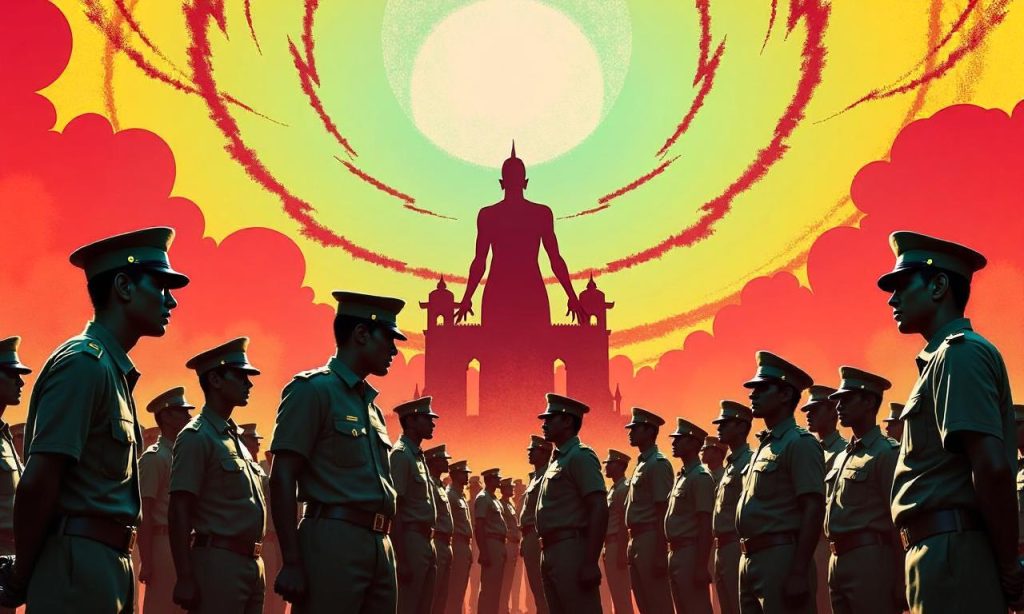
Voters queued at polling stations across Myanmar on Sunday to cast their ballots in a contentious election, which the military junta claims will restore democratic governance. This follows nearly five years of military rule, during which the coup d’état triggered a brutal civil war that the junta has yet to fully quell.
The country’s most prominent politician, Aung San Suu Kyi, remains imprisoned, while its most successful political party has been dissolved. The ballot is largely controlled by parties perceived to align with the military, and hundreds of individuals have been arrested under a new law that criminalizes obstruction, disruption, and criticism of the poll.

New Law and Restricted Voting
In certain regions, voting will not occur as the junta continues its conflict with a network of ethnic rebels and pro-democracy fighters in the hilly borderlands and arid central plains. A year prior, these groups achieved several victories against the military, sparking brief hopes that the generals might be ousted, ending their long-standing grip on the nation’s political and economic landscape.
However, this year, junta troops, bolstered by tens of thousands of conscripts under a new draft law and equipped with advanced Chinese weaponry, have regained significant territory. Analysts suggest this military resurgence has created an opportunity for the junta to conduct the election, aiming to bolster its legitimacy through a new parliament where a quarter of seats are reserved for the military.
International Legitimacy and Voter Constraints
“I was more excited to vote in the previous elections because we had the freedom to choose then,” Su, an accountant identified by CNN using her first name, said. “This time, even casting a protest vote has become impossible. In previous elections, I could leave my ballot blank. But this time, the electronic vote-counting machines only accept ballots marked for parties approved by the junta-stacked election commission.”
According to Richard Horsey, Myanmar adviser for the International Crisis Group, the election is primarily a means for the military to rectify what it considers an unacceptable outcome from five years ago, when the National League for Democracy (NLD) secured a landslide second term. “What is really important is that countries don’t give unwarranted backing or legitimacy to these elections,” he added. “They have to be seen for what they are—a cynical exercise to perpetuate military power.”
Yangon and the Election Stages
In Myanmar’s commercial center, Yangon, national flags adorned the main highway leading into the city, and electronic billboards displayed state media coverage of the election. The voting process will take place in three stages through January, with the first day of voting occurring on Sunday. The junta’s leadership has explicitly signaled its expectations for the outcome, with Sen. Gen. Min Aung Hlaing, who orchestrated the 2021 coup, urging voters to support candidates “who can cooperate sincerely with the Tatmadaw,” as reported by state-run media.